


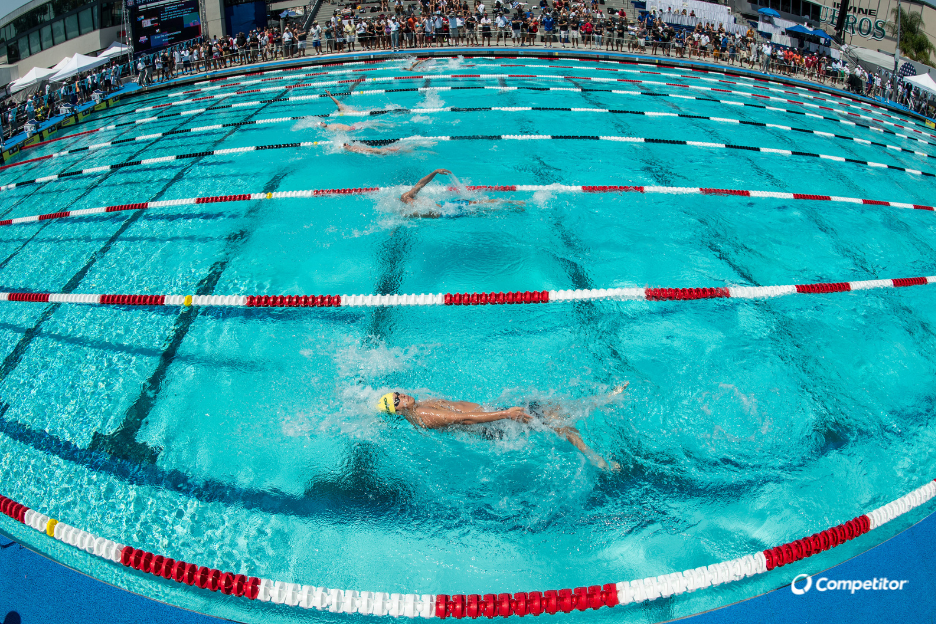
A qualifying time. A first-place finish. A world record. In competitive swimming, it’s safe to say there’s a lot riding on hundredths of a second.
And when it comes to shaving off those fractions of a time, training, technique, and race strategy will always matter most. But a properly configured lane-line system certainly doesn’t hurt.
For swimmers to perform at their best, they need a pool environment that works with them—not against them. Lane lines play an important role in creating those conditions. The way they’re placed, tensioned, and constructed can make a real difference in how well they manage waves moving across the pool. When everything is set up correctly, lane lines help keep water conditions more consistent so a swimmer’s time is as efficient as possible.
Lane Width
Lane width can have a big impact on how water moves across the pool. When swimmers are racing close together, the waves created in one lane can quickly make their way into the next. And when that happens, swimmers are left working through more than just the water in front of them—they are also dealing with the wake coming from the athletes around them.
That is why lane width matters. It gives swimmers a little more space to hold their line while giving lane lines room to do what they are designed to do: break up wave energy before it becomes a distraction in the next lane.
World Aquatics regulations call for competition lanes to be 2.5 meters wide. That spacing helps create a defined racing area for each swimmer while supporting more consistent water conditions throughout the pool.
Takeaway: Proper lane width gives waves more room to lose energy before reaching the next lane, supporting a steadier, more consistent racing environment.
Lane Line Tension
A lane line can only do its job if it stays where it is supposed to be.
When a lane line is loose, it can sag, drift, or shift as swimmers move through the water. That gives waves more opportunity to travel between lanes, which can create a measurable disadvantage for swimmers.
Proper tension:
- Keeps lane lines aligned from wall to wall.
- Helps wave-dampening components perform as designed.
- Reduces excess movement caused by waves and swimmer contact.
- Creates a clean, consistent visual guide for athletes, officials, and spectators.
Competitor Swim racing lanes are anchored by tensioners designed to keep the line secure and properly aligned through training and competition. Maintaining tension is part of maintaining performance: regular inspection of the reel, cable, anchors, and tensioner can help facilities identify wear before it affects a meet.
Lane Line Materials
Not all lane lines are built alike. Their materials and construction affect durability, visibility, and—most importantly for race conditions—their ability to manage turbulence.
Competition racing lanes are designed with discs and donuts that rotate and move with the water. Rather than simply allowing a wave to pass uninterrupted into the next lane, these components help break up the wave and disperse its energy.
What to look for in lane-line materials:
- Wave-dampening disc design: Helps break up and spread out waves instead of simply dividing lanes.
- Durable components: Supports consistent performance through regular use, storage, and exposure to pool chemicals.
- Reliable cable and hardware: Helps the full system stay secure and correctly tensioned.
Every pool is a little different. Meet schedules, pool dimensions, daily programming, and level of use can all shape what a facility needs from its lane lines. But the goal stays the same: choose a system that is built to handle the environment and manage water movement—not just divide the pool into lanes.
That’s where Competitor Swim comes in. Our lane lines are designed for facilities that need dependable equipment, meet after meet, supporting a better experience for swimmers, coaches, officials, and spectators.
How Competitor Lane Lines Work
Using a system of discs and donuts with flow-through technology, Competitor racing lanes allow the energy from a swimmer’s wake to be absorbed and dispersed through the channel within the lane line. This prevents waves from reflecting back into the lane – eliminating dead spots and water bounce-back – and ensures consistent wave-quelling from one lane to the next.
A Better Setup Supports Better Swim Timing
To be clear: a great lane-line setup cannot replace a swimmer’s preparation or talent. It cannot guarantee a personal best, a championship title, or a world record.
But it can help ensure swimmers are racing the athletes beside them versus unnecessary turbulence in the water.
Learn more about how Competitor Swim racing lanes and hardware can help your facility build a pool setup that supports swimmer performance.
